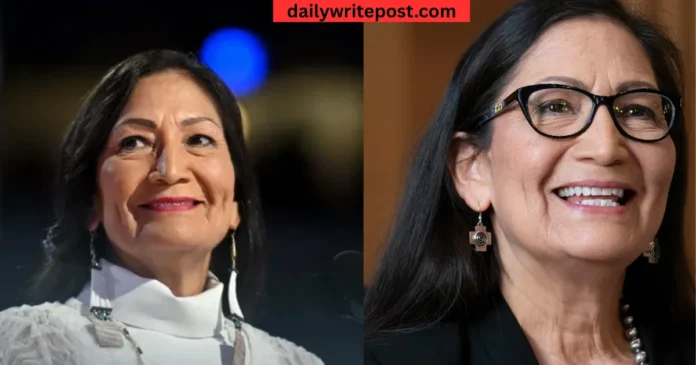
Deb Haaland is one of the most influential political leaders in modern American history. Known for breaking barriers and creating opportunities for Indigenous communities, she became the first Native American Cabinet secretary in United States history when she was confirmed as Secretary of the Interior in 2021. Her journey from a working-class family to Congress and eventually to the presidential cabinet reflects determination, resilience, and public service.
The story of Deb Haaland goes beyond politics. It represents a turning point in American leadership, Indigenous representation, environmental policy, and public land management. Her rise inspired millions of people who had rarely seen Native voices represented at the highest levels of government. Today, she remains one of the most recognizable Indigenous political figures in the United States.
Early Life and Family Background
Debra Anne Haaland was born on December 2, 1960, in Winslow, Arizona. She is an enrolled member of the Laguna Pueblo, one of New Mexico’s historic Native communities. Her family heritage combines Native American traditions with military service and public responsibility, shaping her worldview from an early age.
Her mother, a Native American woman from Laguna Pueblo, served in the United States Navy, while her father was a Marine Corps officer. Because of her parents’ military careers, Haaland moved frequently during childhood and attended numerous schools across the country. These experiences exposed her to diverse communities and taught her adaptability, independence, and perseverance.
Growing Up in a Military Family
Life in a military household meant frequent relocation and constant adjustment. Deb Haaland attended thirteen different public schools before graduating from high school in Albuquerque, New Mexico. While these changes were often challenging, they helped her understand the experiences of ordinary American families.
Living in different states also strengthened her appreciation for cultural diversity and local communities. She learned how government policies affect education, housing, and employment opportunities for working families. These lessons would later shape her political priorities as a legislator and cabinet secretary focused on practical solutions rather than political slogans.
Education and Academic Achievements
Education played a central role in Haaland’s personal development. She earned a Bachelor of Arts in English from the University of New Mexico in 1994, proving that nontraditional students can succeed academically regardless of age or circumstances.
Later, she pursued legal studies and obtained a Juris Doctor degree from the University of New Mexico School of Law in 2006. Her legal education provided a strong foundation for understanding public policy, tribal sovereignty, environmental law, and constitutional issues. These qualifications later proved invaluable during her congressional and cabinet careers.
Challenges Before Political Success
The path to national politics was not easy for Deb Haaland. She has openly discussed periods of financial hardship, including moments when she depended on public assistance programs to support her family. As a single mother, she worked multiple jobs while raising her daughter and completing her education.
These experiences deeply influenced her political philosophy. Rather than viewing public programs as abstract policies, she understood them as lifelines for families facing economic struggles. Her firsthand knowledge of hardship made her advocacy for affordable healthcare, childcare, education, and economic opportunity especially credible and relatable.
Building a Career Outside Politics
Before entering elected office, Haaland built an impressive professional career in both tribal and community leadership roles. She worked as a tribal administrator for the San Felipe Pueblo, where she gained experience managing governmental programs and negotiating policy issues affecting Native communities.
She also operated a small business and worked in community organizing efforts throughout New Mexico. These experiences taught her about entrepreneurship, economic development, and the importance of local leadership. Her practical experience outside politics distinguished her from many traditional political candidates and strengthened her public image.
Entry into Political Activism
Political activism became a natural extension of Haaland’s community work. She became involved in voter registration drives and grassroots organizing campaigns designed to increase Native American participation in elections.
Her activism focused heavily on improving Indigenous representation within political institutions. She believed that Native communities deserved a stronger voice in decisions regarding land management, healthcare, education, and tribal sovereignty. These early organizing efforts helped establish the network that later supported her successful political campaigns.
Leadership Within the Democratic Party
A major breakthrough came when Haaland was elected chair of the New Mexico Democratic Party in 2015. This position allowed her to build statewide relationships and demonstrate her organizational abilities.
As party chair, she focused on increasing voter engagement, supporting local candidates, and strengthening grassroots fundraising efforts. Her leadership earned praise from both party officials and community activists. The experience also prepared her for larger political responsibilities and increased her visibility across New Mexico.
The Historic 2018 Congressional Campaign
The 2018 election changed American political history. Running for New Mexico’s First Congressional District, Deb Haaland campaigned on healthcare reform, environmental protection, tribal rights, and economic opportunity.
Her campaign attracted national attention because of its historic significance. Alongside another Native American candidate, she became one of the first Native American women ever elected to the United States Congress. Her victory represented an important milestone for Indigenous representation in federal government and inspired communities across the country.
Serving in the United States House of Representatives
As a member of Congress, Haaland quickly established herself as an advocate for environmental conservation and tribal issues. She served on several important committees and participated in discussions involving natural resources, public lands, and government accountability.
She worked on legislation related to clean energy, economic recovery, and Native American communities. Her congressional record demonstrated a commitment to bipartisan cooperation while maintaining strong support for progressive priorities. Many observers viewed her as an emerging national political figure during this period.
Advocacy for Indigenous Communities
One of the defining characteristics of Haaland’s public service has been her advocacy for Indigenous peoples. Throughout her congressional career, she highlighted issues that had often received limited national attention.
Among her priorities were tribal sovereignty, healthcare access, education funding, and protections for Native women facing violence and disappearances. She consistently argued that federal policies affecting Native communities should involve meaningful consultation with tribal governments rather than unilateral decisions made in Washington.
Nomination as Secretary of the Interior
In December 2020, President Joe Biden nominated Deb Haaland to serve as Secretary of the Interior. The nomination generated historic excitement among Indigenous communities and political observers worldwide.
The Department of the Interior manages public lands, national parks, wildlife programs, and relationships with federally recognized tribes. Because of the department’s historical role in Native American affairs, many viewed her nomination as particularly symbolic and significant. Her confirmation marked a major moment in American political history.
Becoming the First Native American Cabinet Secretary
The United States Senate confirmed Haaland in March 2021, officially making her the first Native American cabinet secretary in American history. The achievement represented a milestone for both Indigenous representation and women’s leadership.
For many Native Americans, the confirmation carried deep emotional significance because the Department of the Interior had historically overseen policies that harmed Indigenous communities. Haaland’s appointment symbolized progress, reconciliation, and a new chapter in federal tribal relations.
Managing America’s Public Lands
As Secretary of the Interior, Haaland supervised millions of acres of public land and oversaw major environmental decisions affecting the entire country. Her responsibilities included national parks, wildlife refuges, energy leases, and conservation initiatives.
She emphasized balancing economic development with environmental protection. Her leadership reflected a belief that conservation and economic growth could coexist when managed responsibly. This approach shaped many of the department’s major initiatives during her tenure.
Climate Policy and Conservation Efforts
Environmental policy became one of the defining aspects of Haaland’s leadership. She supported investments in renewable energy while expanding conservation programs across public lands.
Her department promoted habitat restoration projects, wildlife protection efforts, and climate resilience planning. Supporters praised her commitment to addressing climate change through long-term environmental management strategies. Critics occasionally challenged aspects of these policies, but her influence on conservation policy remained significant.
The Federal Indian Boarding School Initiative
Perhaps one of Haaland’s most important initiatives involved investigating the history of federal Indian boarding schools. The program sought to document the experiences of Native children who were separated from their families and communities.
The initiative collected records, testimonies, and historical evidence regarding the boarding school system. For many Indigenous families, this effort represented an important step toward truth, acknowledgment, and healing. Historians widely consider this project one of the most meaningful actions of her tenure.
Leadership Style and Public Image
Observers often describe Deb Haaland as collaborative, disciplined, and community-oriented. Her leadership style emphasizes listening sessions, consultation with local communities, and inclusive decision-making processes.
She frequently highlights her personal experiences as a single mother and working-class American when discussing public policy. Supporters appreciate her authenticity and ability to connect with ordinary voters. These qualities helped strengthen her national reputation beyond traditional political circles.
Personal Life and Values
Outside politics, Haaland is known for her commitment to family, cultural traditions, and community service. She often speaks about the importance of Indigenous identity and preserving cultural heritage for future generations.
Her daughter has remained an important source of support throughout her career. Haaland also frequently discusses her journey toward long-term sobriety and personal growth, using her experiences to encourage resilience and perseverance in others facing difficult circumstances.
Deb Haaland and the 2026 New Mexico Governor Race
Following her service in the cabinet, Haaland returned to New Mexico politics and launched a campaign for governor in 2025. In June 2026, she secured the Democratic nomination for governor and advanced to the general election campaign.
If elected, she would become the first Native American woman ever elected governor of a U.S. state. Her campaign has focused on healthcare affordability, education improvement, public safety, and economic opportunity for working families throughout New Mexico.
Legacy and Historical Importance
The legacy of Deb Haaland extends beyond the offices she has held. Her career changed perceptions about Indigenous leadership and expanded opportunities for future generations of Native public servants.
Historians will likely remember her as a transformative figure who reshaped conversations about representation, environmental stewardship, and tribal sovereignty. Her achievements demonstrate how political institutions can evolve to better reflect the diversity of the American people.
Conclusion
The remarkable journey of Deb Haaland represents persistence, representation, and historic progress. From her early struggles as a single mother to becoming the first Native American cabinet secretary, her story has inspired communities across the United States and around the world.
