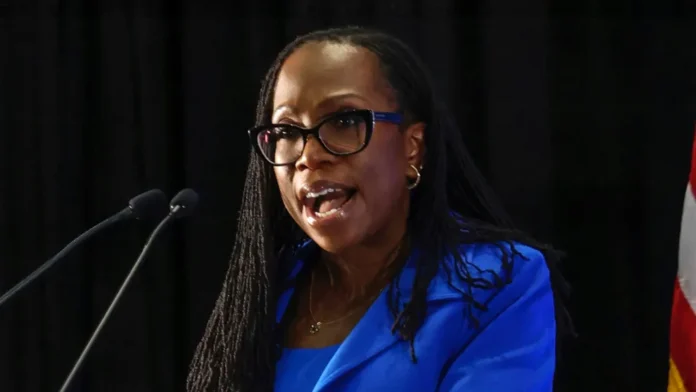
Justice Ketanji Brown Jackson is the first Black woman to serve on the United States Supreme Court, appointed in 2022. Her journey to the highest court in America is both inspiring and groundbreaking. Before joining the Supreme Court, she served as a federal judge on the U.S. District Court and later on the U.S. Court of Appeals. Throughout her career, Justice Jackson has built a reputation for fairness, deep legal knowledge, and a commitment to the principles of the Constitution. Her voice carries significant weight, especially when she speaks on matters affecting democracy and the rule of law.
Her influence comes not only from her position but also from the clarity with which she addresses complex legal issues. When we see the phrase “Justice Jackson warns”, it refers to her concerns about threats to American democracy, judicial independence, and public trust in government institutions. She often delivers these warnings through dissenting opinions in Supreme Court cases, speeches, and interviews, making her one of the most closely watched justices in modern American history.
Quick Information Table – Justice Jackson at a Glance
| Attribute | Details |
|---|---|
| Full Name | Ketanji Brown Jackson |
| Supreme Court Appointment | 2022 |
| First Black Woman Justice | Yes |
| Previous Roles | Federal Judge, Court of Appeals, Legal Advisor |
Justice Jackson’s warnings are not abstract; they are grounded in real-world consequences. She emphasizes that when laws or decisions threaten fairness or weaken oversight, it can erode public trust and destabilize democratic institutions. This makes understanding her statements crucial for anyone interested in law, governance, or civic engagement. Her warnings are both a call to attention and a roadmap for protecting the Constitution in challenging times.
Who Is Justice Jackson? Background and Role on the Supreme Court
Justice Ketanji Brown Jackson is the first Black woman to serve on the United States Supreme Court, appointed in 2022. Her journey to the highest court is inspiring, starting as a public defender and advancing through the federal judiciary. Jackson is known for her deep legal knowledge, fairness, and commitment to the Constitution. When the media says “Justice Jackson warns”, it refers to her expressing concerns about threats to democracy, judicial fairness, and public trust. Her words often carry weight because they are grounded in real-world consequences.
Her influence stems not only from her role but from the clarity and authority she brings to legal debates. Through dissenting opinions, speeches, and interviews, she consistently emphasizes the importance of the rule of law. These warnings are not abstract; they are a call to attention for policymakers, lawyers, and the public alike to safeguard democratic institutions.
Quick Information Table – Justice Jackson at a Glance
| Attribute | Details |
|---|---|
| Full Name | Ketanji Brown Jackson |
| Supreme Court Appointment | 2022 |
| First Black Woman Justice | Yes |
| Previous Roles | Federal Judge, Court of Appeals, Legal Advisor |
What Has Justice Jackson Warned About?
Justice Jackson has repeatedly warned about threats to the rule of law. She believes that when decisions favor certain groups over fairness, it can erode trust in institutions. Her warnings often focus on the balance of power in government, emphasizing that courts must protect democratic principles rather than bend to political pressures. This is why her dissents are widely discussed — they act as guideposts for identifying risks to the Constitution.
Another major warning she shares is about democracy at risk. Jackson stresses that public confidence in government and the courts is fragile. When citizens perceive bias or unfairness in legal rulings, it can weaken democratic participation. Her messages remind Americans that protecting democratic norms is a collective responsibility, and the judiciary plays a central role in maintaining that balance.
Quick Information Table – Key Themes of Justice Jackson’s Warnings
| Theme | Explanation |
|---|---|
| Rule of Law | Courts must act impartially to maintain public trust and constitutional integrity. |
| Democracy at Risk | Decisions that appear unfair or biased can undermine civic engagement and faith in institutions. |
| Judicial Independence | Attacks on judges threaten the separation of powers and judicial authority. |
| Court Reputation | Transparency and fairness are essential to prevent public perception of bias. |
Notable Cases Highlighting Her Warnings
Justice Jackson’s warnings often appear in her dissenting opinions, which are powerful because they highlight where she believes the Supreme Court may threaten legal fairness or democratic norms. One example is her dissent on cases involving executive power, where she cautioned against expanding presidential authority without proper checks. She argued that ignoring limits on executive actions could destabilize the balance of power.
She also warned about rulings affecting economic fairness and social policies. In cases where decisions seemed to favor the wealthy or reduce protections for vulnerable communities, Jackson emphasized the long-term risk of eroding trust in the judicial system. Her dissents are widely studied because they provide a legal and moral framework for understanding what a fair and independent judiciary should uphold.
Why Justice Jackson’s Warnings Matter
Justice Jackson’s messages matter because they affect public confidence in the courts. When citizens believe the Supreme Court operates fairly, it strengthens democracy. Conversely, perceived bias or overreach can fuel distrust, reduce civic engagement, and weaken adherence to laws. Her warnings act as a guide for understanding how judicial decisions ripple through society.
Her perspectives also matter for future legal and political discussions. Lawyers, policymakers, and educators reference her dissents when debating democratic safeguards or analyzing new laws. Jackson’s approach reminds Americans that the judiciary is not isolated from society — it shapes the foundation of fairness, accountability, and constitutional balance.
Frequently Asked Questions (FAQs)
1. What does “Justice Jackson warns” mean?
It means Justice Ketanji Brown Jackson is alerting the public about risks to democracy, the Constitution, and fair judicial practices. Her warnings come from dissents and speeches.
2. Is Justice Jackson warning about democracy or the Constitution?
Both. She emphasizes that threats to judicial fairness or executive power can weaken democratic norms and public trust in the Constitution.
3. How do her warnings affect everyday Americans?
Her warnings highlight how court decisions can impact civil rights, social policies, and fairness in society. Understanding them helps citizens engage responsibly in democracy.
4. Do other Supreme Court justices agree with her warnings?
Some may align philosophically, but her warnings are unique in tone and emphasis. Dissents often show where opinions diverge in interpretation or priority.
5. Where can I read more about her warnings?
Her dissents and public statements in interviews or speeches are the best sources. They provide detailed explanations of her concerns about the judiciary and democracy.
