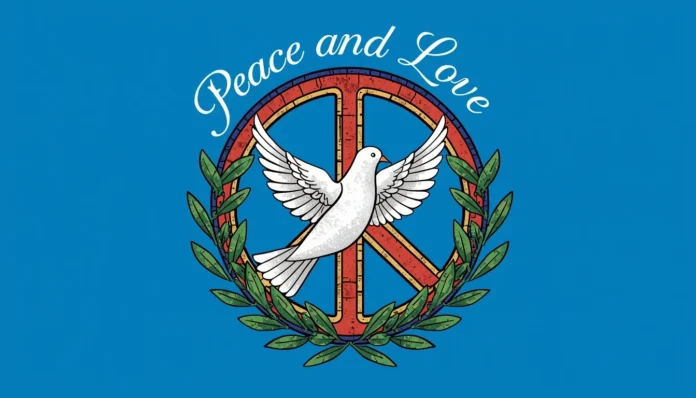
Introduction to the Peace Symbol
The peace symbol stands as a simple yet powerful design representing peace, anti-war movements, and unity. Its distinct circular shape with vertical and downward lines inside makes it easy to recognize. Over decades, people have embraced this symbol, crossing cultural boundaries to inspire millions who rally for harmony and social justice.
History of the Peace Symbol
British designer Gerald Holtom created the peace symbol in 1958. The Campaign for Nuclear Disarmament (CND) commissioned the design to promote nuclear disarmament. Holtom combined semaphore signals for the letters “N” and “D” (Nuclear Disarmament) to create this icon. Activists quickly adopted the symbol during the 1960s Vietnam War protests, solidifying its place as a peace movement emblem.
Table: Semaphore Signals Used in the Peace Symbol
| Letter | Semaphore Signal Description | Position in Symbol |
|---|---|---|
| N | Two flags held in an inverted “V” | Two downward lines |
| D | One flag pointed straight up | Vertical central line |
Meaning and Interpretation
People view the peace symbol as a sign of hope for global peace and an end to violence. While activists first used it for nuclear disarmament, it soon represented general anti-war sentiments, civil rights, and social justice. Nowadays, people also associate it with love, unity, and non-violence.
Cultural Impact of the Peace Symbol
The peace symbol has moved beyond its original purpose to appear in fashion, music, art, and popular culture. People wear it on clothing, jewelry, posters, and tattoos to show their personal or collective commitment to peace.
-
Activists wear it during protests and rallies worldwide.
-
Music festivals and counterculture movements feature the symbol prominently.
-
Brands use it to promote messages of harmony and goodwill.
Modern Usage and Relevance
In today’s fast-paced and often divided world, the peaca symbol continues to shine as a beacon of hope. Many organizations use it to advocate for disarmament, human rights, and environmental protection. Its universal message inspires new generations to work toward a more peaceful future.
