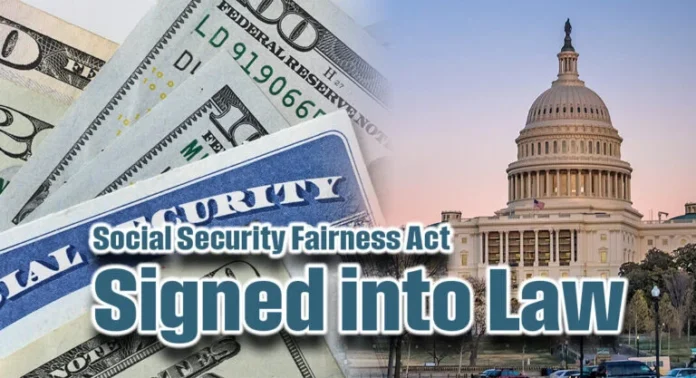
The Social Security Fairness Act is a law that changes how Social Security benefits are calculated for certain workers. In easy words, it was created to fix benefit cuts that many people believed were unfair. For many years, some workers paid Social Security taxes during part of their careers but later saw their benefits reduced because they also received a government pension. This law was designed to correct that problem and bring balance back into the system.
The Social Security Fairness Act mainly removes two rules that lowered benefits for specific groups of people. These rules affected workers in public service jobs such as teachers, firefighters, police officers, and other government employees. Even though many of these workers paid into Social Security at different points in their lives, they were still penalized at retirement. The Act focuses on one simple idea: if you paid into Social Security, you should receive the benefits you earned.
Quick Facts About the Social Security Fairness Act
| Key Detail | Information |
|---|---|
| Law Name | Social Security Fairness Act |
| Main Goal | Fair Social Security payments |
| Affected Groups | Public workers and families |
| Key Change | Removes unfair benefit reductions |
This law matters because it restores trust in the Social Security system. Many retirees were confused and frustrated when their checks were smaller than expected. By fixing these long-standing issues, the Social Security Fairness Act helps people better understand their benefits and plan for retirement with confidence.
Why the Social Security Fairness Act Was Needed
Before the Social Security Fairness Act, many workers faced benefit cuts they never expected. These reductions happened because of old rules that treated public service workers differently from private-sector employees. Even if someone paid Social Security taxes for years, their benefits could be reduced just because they earned a government pension later in life. This created a sense of unfairness and confusion among retirees.
Over time, complaints grew louder from retirees, worker unions, and advocacy groups. They argued that these rules punished people for choosing careers in public service. The Social Security Fairness Act was introduced to correct this imbalance and ensure that benefits are based on what people actually earned, not where they worked. In the next section, we will look closely at one of the rules the Act removed, known as the Windfall Elimination Provision (WEP).
Windfall Elimination Provision (WEP) Explained
The Windfall Elimination Provision (WEP) was a rule that reduced Social Security benefits for people who worked in jobs not fully covered by Social Security. This mostly affected public employees like teachers or government workers who later worked private-sector jobs where they paid Social Security taxes. Even though they paid into the system, WEP changed the formula used to calculate their benefits, which often resulted in much smaller monthly payments.
Many retirees felt WEP was confusing and unfair. Two people could work the same number of years and earn the same wages, yet receive very different benefits simply because one had a public pension. The Social Security Fairness Act removes WEP so benefits are calculated more evenly. This change allows workers to receive Social Security payments that better reflect what they actually earned over their lifetime.
Government Pension Offset (GPO) Explained
The Government Pension Offset (GPO) affected Social Security spousal and survivor benefits. If someone received a government pension from a job not covered by Social Security, their spousal or survivor benefit could be reduced or even eliminated. This rule mainly impacted widows, widowers, and spouses who depended on Social Security after losing a partner.
For many families, GPO caused financial stress during already difficult times. A surviving spouse might expect to receive Social Security support, only to find out it was reduced because of a government pension. The Social Security Fairness Act removes the GPO rule, allowing spouses and survivors to receive the full benefits they were promised, which brings relief and stability to many households.
Who Benefits From the Social Security Fairness Act
The Social Security Fairness Act helps millions of Americans who were affected by WEP and GPO. This includes public sector workers such as teachers, firefighters, police officers, and federal or state employees who earned pensions outside the Social Security system. It also helps spouses and surviving family members whose benefits were previously reduced.
These changes are especially important for retirees living on fixed incomes. Restoring full benefits can make a real difference in covering everyday costs like housing, healthcare, and food. The Act recognizes the value of public service and ensures that workers are not punished for choosing careers that serve their communities.
Who Is Most Impacted
| Group | How They Benefit |
|---|---|
| Public sector retirees | Higher monthly benefits |
| Spouses | Restored spousal payments |
| Survivors | Full survivor benefits |
| Future retirees | Fair benefit calculations |
How the Social Security Fairness Act Affects Benefits
Under the Social Security Fairness Act, many retirees can expect an increase in their monthly Social Security payments. Since WEP and GPO are removed, benefits are now calculated using the standard formula. This means payments more closely match what workers paid into the system over time.
In some cases, beneficiaries may also receive adjustments for past reductions. While the exact amount varies, the overall goal is fairness and clarity. Retirees can now plan their finances with more confidence, knowing their benefits will not be reduced because of outdated rules.
Common Questions About the Social Security Fairness Act
FAQs (Approx. 100 Words)
1. What is the Social Security Fairness Act?
It is a law that removes unfair Social Security benefit reductions.
2. Who benefits the most?
Public workers, retirees, spouses, and survivors.
3. Does it increase monthly payments?
Yes, many people will see higher benefits.
4. Does it affect future retirees?
Yes, benefits will be calculated fairly going forward.
5. Is the law already active?
Yes, it has been passed and is being implemented.
